
Samples can be tough and sometimes leave behind residue due to the nature of the sample. This guide covers which samples can be properly cleaned with our Chip Cleaning Station (CCS), why it matters, and a quick check you can run before every measurement.
Cleaning Is Part of Working With Any Sample
Cleaning is not unique to viscometers or microfluidic chips. In almost every lab, the equipment that touches a chemical needs proper cleaning afterward, whether that is glassware, pipettes, mixing vessels or analytical instruments. The more challenging the material, the more care it takes.
Difficult samples are not a reason to avoid measuring them. Particle-laden, high-viscosity and curable materials still requires accurate analysis. Instead of ignoring these challenges or steering clear of tricky samples, the better approach is to understand how your sample behaves and plan for it:
- Know what it leaves behind: particles, films, or material that cures or dries in place.
- Choose the right cleaning method before you run the sample, not after a problem appears.
- Verify before reuse with a reference standard, so you know the next measurement starts clean.
Knowing your samples protects both your results and your equipment, and it turns hard-to-handle materials into ones you can measure with confidence.
When it comes to viscosity measurements, we have the solution for you.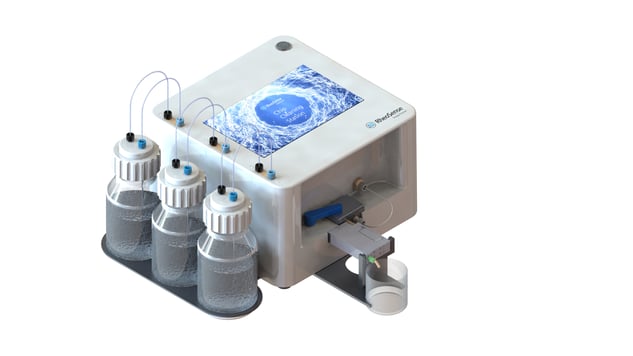
The Big Three: Use the CCS to Automatically Clean
1. Samples containing particles
Suspensions, slurries and emulsions with solids.
2. High viscosity above 8000 cP
Silicone oils, honey, polymer solutions and pastes.
3. UV-curable glues and resins
UV/light-cure adhesives, acrylates and 3D-printing resins.
Specific Samples That Work Perfectly with CCS
These samples leave films, solids or cured material behind:
- Particulate inks and paints: Inkjet inks, coatings and latex that coalesce or dry into a skin.
- Battery and CMP slurries: Carbon black, NMP/PVDF binders and abrasives leave both particles and film.
- Waxy oils and greases: Crude oil, petrolatum and lubricants that solidify at room temperature.
- Reactive two-part systems: Epoxies, cyanoacrylates and silicones that cure on mixing or moisture.
- Gels and polymer networks: Hydrogels and Carbopol are high viscosity and sticky, so they are hard to rinse out.
- Sunscreens and mineral creams: ZnO/TiO₂ particles in an oily base leave both solids and film.
- Whole blood: Cells and clots can clog the chip inlet and foul the channel. Handle as a biohazard.
Let's Connect
Have a question about a specific sample? Contact us with your application and learn how to properly clean them and get great viscosity measurements.